Saudi Arabia is one of the fastest-growing pharmaceutical markets in the Middle East, which makes it an attractive destination for global pharmaceutical companies. To successfully enter this market, it’s important to understand the Drug Import Regulations in Saudi Arabia and follow the rules set by the Saudi Food and Drug Authority (SFDA). In 2025, Saudi Arabia’s pharmaceutical market was valued at around USD 16 billion, which makes it the largest pharmaceutical market in the region. And according to Euromonitor International, around 80% of medicines are imported, which creates excellent opportunities for international pharmaceutical exporters.
Whether you export generic medicines, branded medicines, or over-the-counter (OTC) products, you need to follow Saudi Arabia’s import rules before your products can enter the market. In this blog, we will provide a complete guide to the Drug Import Regulations in Saudi Arabia, including SFDA requirements, product registration, import permits, and documentation. You will also discover how Livealth Biopharma helps international pharmaceutical companies to comply with Saudi Arabia’s regulations.
Why Saudi Arabia is an Attractive Pharmaceutical Market
Saudi Arabia is the largest pharmaceutical market in the Gulf Cooperation Council (GCC), which creates a great opportunity for international pharmaceutical companies. With strong government support and better access to healthcare services, Saudi Arabia has become an important market for pharmaceutical exporters around the world. As Saudi Arabia is encouraging local pharmaceutical manufacturing, it still imports medicines that play a major role in meeting the country’s healthcare needs. This creates an excellent opportunity for global pharmaceutical manufacturers and exporters who are looking to expand their business in the Middle East.
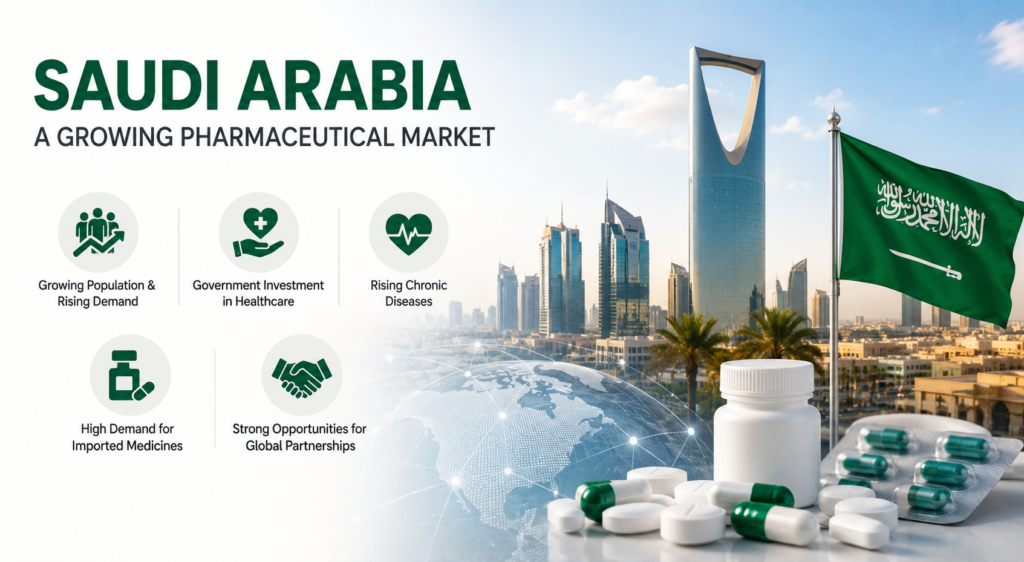
Some Key Reasons Behind the Growth of the Saudi Pharmaceutical Market Include:
- The growing population and longer life expectancy lead to a higher demand for medicines.
- Increased government investment in healthcare through the Vision 2030 initiative.
- Rising cases of chronic diseases in Saudi Arabia, such as diabetes, heart disease, and hypertension.
- Strong demand for imported pharma products, especially innovative and speciality medicines.
- Moreover, better opportunities for international pharmaceutical companies to partner with local businesses and distributors.
Who Regulates Drug Imports in Saudi Arabia?
The Saudi Food and Drug Authority (SFDA) is the main government authority responsible for regulating drug imports in Saudi Arabia. It manages the registration, import, manufacturing, distribution, and safety of pharmaceutical products to ensure that only safe and high-quality medicines are available in the country. Before any medicine can be imported and sold in Saudi Arabia, it must meet the SFDA’s strict standards for quality, safety, and effectiveness.
Every international pharmaceutical manufacturer or drug exporter must comply with SFDA regulations before exporting medicines to Saudi Arabia. Following these requirements helps to ensure faster approvals, smooth customs clearance, and successful access to the pharmaceutical market of Saudi Arabia. Basically, the SFDA is responsible for:
- Reviewing pharmaceutical product registrations.
- Issuing market authorisation for approved medicines.
- Checking GMP compliance of manufacturing facilities.
- Approving drug import permits.
- Inspecting imported pharmaceutical shipments at the port of entry.
- Monitoring drug safety after products enter the market.
- Ensuring that medicines follow the required labelling and packaging regulations.
Drug Import Regulations in Saudi Arabia
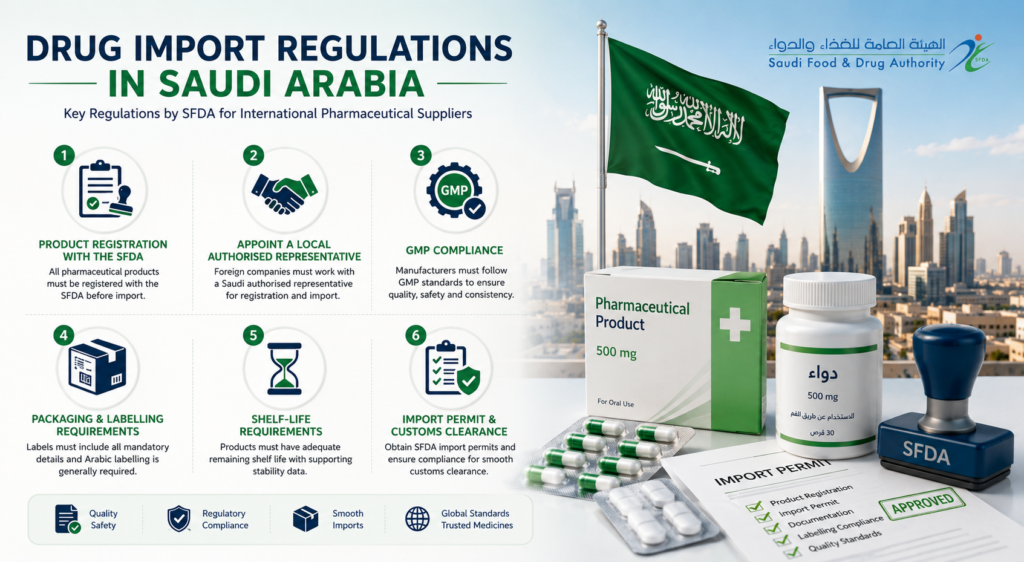
Before medicines can be imported and sold in Saudi Arabia, international pharmaceutical companies must follow the drug import regulations in Saudi Arabia, which are set by the SFDA. Meeting these requirements helps you to ensure faster approvals and smooth entry into the Saudi market. Here are some drug import regulations which are set by the Saudi Food and Drug Authority:
1. Product Registration with the SFDA
Every pharmaceutical product must be registered with the SFDA before it can be imported into pharma market of Saudi Arabia. The manufacturer must submit complete product information that includes scientific, technical, and quality information. The SFDA carefully reviews the product’s quality, safety, effectiveness, and manufacturing standards before approval to sell in the country.
2. Appoint a Local Authorisation Representative
Foreign pharmaceutical companies cannot sell medicines directly in Saudi Arabia without a local authorised representative. Most international manufacturers work with a Saudi distributor or local agent who helps with product registration with the SFDA, import permit applications, customs clearance, and communication with the SFDA. Choosing an experienced local partner can make the registration and import process much easier.
3. GMP Compliance
The SFDA requires all pharmaceutical manufacturers to follow GMP standards to ensure that medicines are produced safely and consistently. In some cases, the SFDA may inspect manufacturing facilities or ask for proof of GMP compliance from recognised health authorities. Manufacturers should have:
- WHO-GMP certification
- A strong quality management system
- Proper manufacturing and validation procedures
- Modern and qualified production equipment
- Documented quality control processes
- Batch tracking and traceability
- Product stability studies
4. Packaging and Labelling Requirements
All imported medicines must follow the SFDA’s packaging and labelling requirements. The label should clearly include product name, generic name, active ingredients, strength, dosage form, batch number, manufacturing date, expiry date, manufacturer’s details, country of origin, and registration number.
In most cases, Arabic labelling is required. The information on the label must be clear, accurate, and match the details approved during product registration.
5. Shelf-Life Requirements
The SFDA also checks the remaining shelf life of medicines when they are imported. Products should have enough shelf life remaining so they can be safely distributed and used before they expire. The manufacturer must also provide stability data to support the product’s approved shelf life.
6. Import Permit and Customs Clearance
Before medicines are shipped to Saudi Arabia, the importer must obtain the required import permits and approvals from the SFDA. If any documents are missing or the shipment does not meet Saudi Arabia’s import regulations, customs authorities may delay or reject the shipment. Following all drug import regulations in Saudi Arabia helps to ensure a smooth and hassle-free import process.
During customs clearance, the authorities check:
- Product registration status
- Import permit and authorization
- Commercial documents
- Shipment details
- Packaging compliance
- Labeling requirements
- Product condition and integrity
Common Challenges Faced by International Pharmaceutical Suppliers
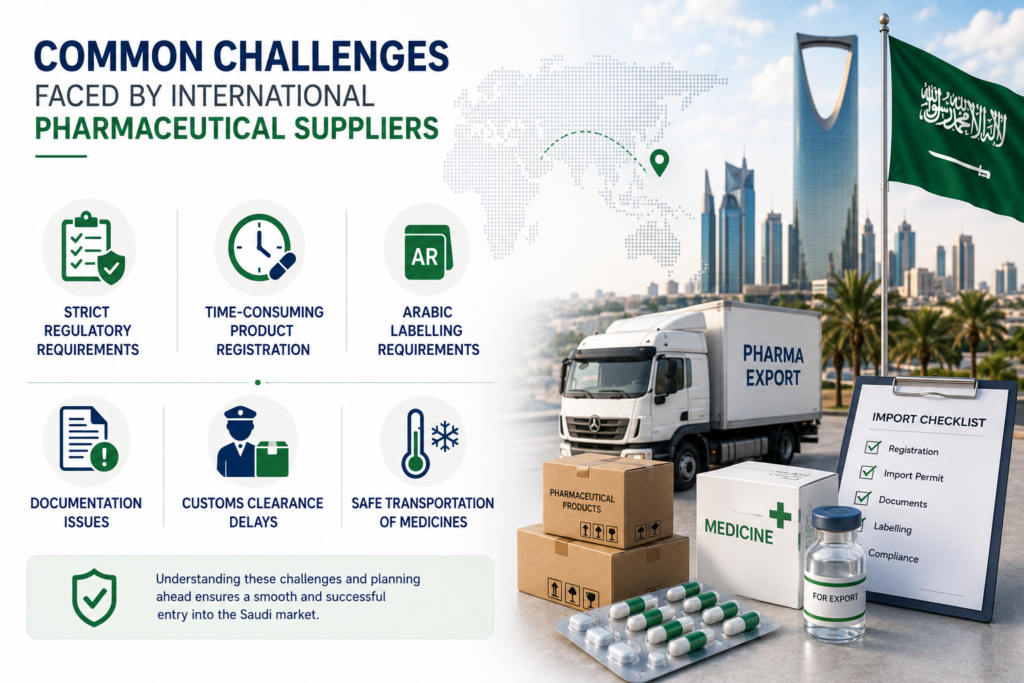
Today, Saudi Arabia offers great opportunities for international pharmaceutical suppliers, but companies may face a few challenges while entering the market. Understanding these challenges can help you to avoid delays and ensure a smoother import process. Common challenges include:
- Strict regulatory requirements: The SFDA has strict rules, and missing or incorrect documents can delay approvals.
- Time-consuming product registration: Getting marketing authorisation can take several months, which completely depends on the product type and the quality of the documents.
- Arabic labelling requirements: All imported medicines must meet the SFDA’s Arabic labelling guidelines. Incorrect or incomplete labels can delay shipments.
- Documentation Issues: Errors in important documents can slow down the approval process.
- Customs clearance delays: If shipping documents do not match the registered product information, then customs authorities may hold or inspect the shipment and cause delays.
- Safe transportation of medicines: Many medicines, especially vaccines, biologics, and injectable products, need controlled temperatures during transport. Using a reliable cold chain logistics system helps to maintain product quality and safety.
Documents Required for Importing Medicines in Saudi Arabia
To import medicines in Saudi Arabia, international pharmaceutical exporters must submit the required documents for SFDA approval and customs clearance. Having complete and accurate documentation helps to avoid delays and speeds up the approval process. Preparing the important documents correctly before shipment helps to ensure smoother product registration, faster customs clearance, and easier compliance with Drug Import Regulations in Saudi Arabia.
Some of the commonly required documents include:
- Certificate of Pharmaceutical Product (CPP)
- Good Manufacturing Practice (GMP) Certificate
- Manufacturing License
- Certificate of Analysis (CoA)
- Free Sale Certificate (FSC)
- CTD or eCTD Product Dossier
- Stability Study Reports
- Batch Manufacturing Records (if required)
- Commercial Invoice
- Packing List
- Certificate of Origin
- Bill of Lading or Air Waybill
- Product Labels and Package Inserts
- Import Permit
- Marketing Authorization Documents
Best Practices for Successful Pharmaceutical Exporters to Saudi Arabia
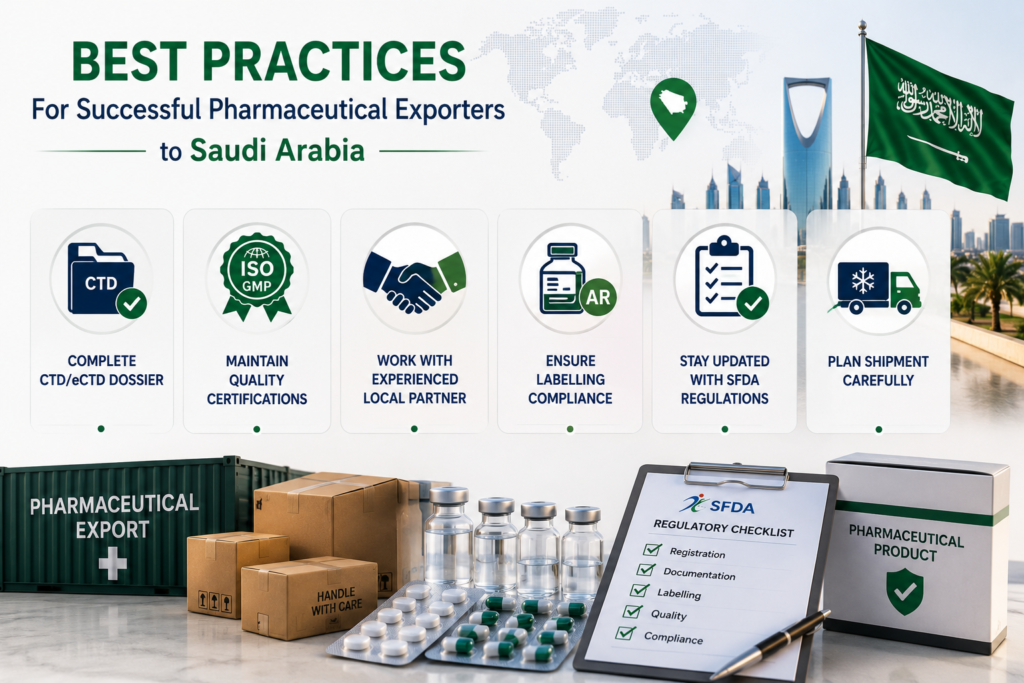
Following a few best practices can help international pharma companies to meet SFDA requirements, reduce delays, and ensure a smooth import process. Here we have mentioned some key practices that will help pharma product exporters:
- Prepare a Complete CTD/eCTD Dossier: Ensure your CTD/eCTD dossier includes accurate information on the product’s quality, safety, effectiveness, and manufacturing process.
- Maintain International Quality Certifications: Ensure that your manufacturing facility follows ISO, WHO-GMP, and other internationally recognised quality standards.
- Work with an Experienced Local Partner: Choose a reliable Saudi agent or distributor who can assist with SFDA registration, import permits, customs clearance, and regulatory communication.
- Ensure Labelling Compliance: Check that all product labels and package inserts meet SFDA guidelines, including Arabic labelling.
- Stay Updated with SFDA Regulations: Keep track of the latest SFDA regulations and regulatory updates to stay compliant and avoid unnecessary delays.
- Plan Shipment Carefully: Use trusted pharmaceutical logistics providers and ensure proper packaging, complete documentation, and temperature-controlled transportation for sensitive medicines.
How Livealth Biopharma Supports Pharmaceutical Exports to Saudi Arabia
Expanding into the pharmaceutical market of Saudi Arabia requires high-quality products, regulatory compliance, and reliable export support. Being a reliable pharmaceutical supplier, Livealth Biopharma helps international pharmaceutical companies enter global markets by offering complete pharmaceutical manufacturing and export solutions. As a trusted pharmaceutical manufacturer in India, Livealth Biopharma manufactures a wide range of products in WHO & GMP-certified facilities. Our product portfolio includes tablets, capsules, syrups, injections, creams, ointments, dry syrups, nutraceuticals, and other healthcare products.
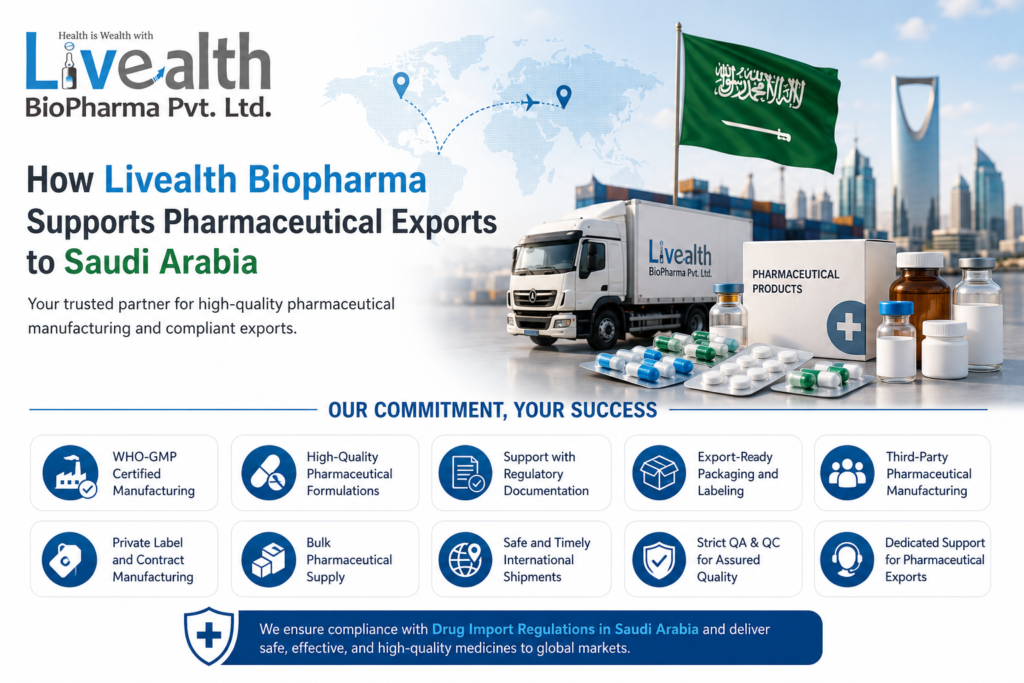
With advanced manufacturing facilities and strong regulatory expertise, our company helps global buyers simplify the export process and comply with Drug Import Regulations in Saudi Arabia by ensuring safe, high-quality, and reliable pharmaceutical supplies.
Livealth Biopharma Offers:
- WHO-GMP-certified pharmaceutical manufacturing
- High-quality pharmaceutical formulations
- Support with regulatory documentation
- Export-ready packaging and labeling
- Third-party pharmaceutical manufacturing
- Private label and contract manufacturing
- Bulk pharmaceutical supply
- Safe and timely international shipments
- Strict quality assurance (QA) and quality control (QC)
- Dedicated support for pharmaceutical exports
Conclusion
Saudi Arabia offers excellent opportunities for international pharmaceutical companies, but success depends on following the Drug Import Regulations in Saudi Arabia and meeting SFDA requirements. Proper documentation, quality standards, and regulatory compliance are essential for smooth market entry. So, if you are looking to export pharmaceutical products to Saudi Arabia? Then Livealth Biopharma is a reliable choice, as we support global businesses with WHO & GMP-certified manufacturing, regulatory documentation, private label services, and reliable export solutions. Contact us today and let our experts help you to navigate the regulatory process and expand your business confidently.