
India is known as the “Pharmacy of the World” because it supplies high-quality and affordable generic medicines to countries around the world. Understanding the cost of importing medicines from India to Niger is important for distributors and healthcare businesses who are looking to source quality medicines at competitive prices. With WHO & GMP-certified manufacturing facilities, advanced production, and cost-effective medicines, Indian pharmaceutical companies have become trusted suppliers for many African countries, including Niger.
According to the World Integrated Trade Solution (WITS), Niger imported pharmaceutical products worth USD 131.45 million in 2024, with India supplying USD 34.31 million, accounting for nearly 26% of the country’s total pharmaceutical imports. This makes India the largest supplier of pharmaceutical products to Niger. However, the cost of importing medicines is not limited to the product price alone; importers also need to consider shipping costs, insurance, customs clearance, and local transportation to calculate the total import cost. So, in this guide, we will explain the cost of importing medicines from India to Niger, the main factors that affect import costs, and practical ways to reduce expenses.
Why Indian Medicines Offer Better Value Than Many Global Alternatives?
India is one of the world’s largest pharmaceutical exporters, known for supplying high-quality and affordable medicines. According to the Pharmaceutical Export Promotion Council of India, India’s pharmaceutical exports reached USD 30.47 billion in FY 2024 to 25, with medicines supplied to more than 200 countries. This reflects the global trust in Indian medicines.
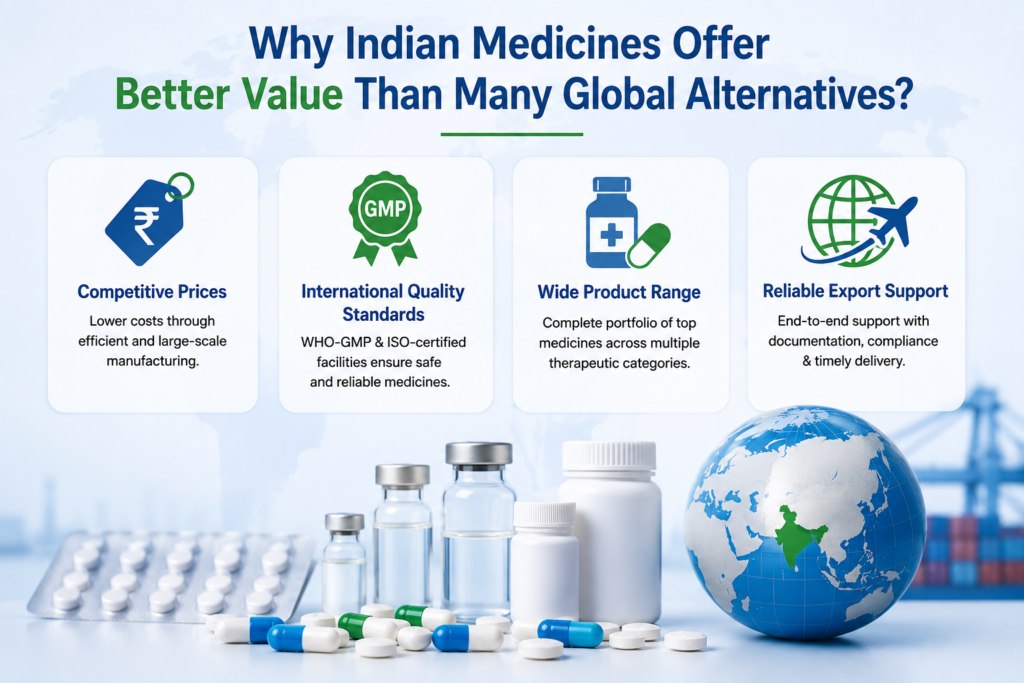
For Importers in Niger, Indian medicines offer several benefits, which include:
- Competitive Prices: India’s large-scale manufacturing and efficient production help to keep medicine costs lower without compromising quality.
- International Quality Standards: Most leading manufacturers produce medicines in WHO-GMP and ISO-certified facilities to ensure safe and reliable products.
- Wide Product Range: Indian exporters offer a complete portfolio of top in-demand medicines in Niger, such as antibiotics, antimalarials, cardiovascular, and many more.
- Reliable Export Support: Indian pharmaceutical companies have strong export experience and provide assistance with documentation, packaging, regulatory compliance, and timely delivery to make the import process smooth and hassle-free.
Why Niger Imports Most of Its Medicines
Niger relies heavily on imported medicines because local pharmaceutical manufacturing is limited. As the population grows and healthcare services improve, the demand for quality medicines continues to increase. Hospitals, pharmacies, and government healthcare programs depend on imports to meet this growing demand. Here are some reasons why Niger imports medicines:
Limited Local Production
Local manufacturers produce only a small range of medicines, so Niger imports essential products, such as antibiotics, antimalarial medicines, and pediatric medicines.
Rising Healthcare Demand
With a population of over 30 million, the need for medicines, maternal healthcare products, and nutritional supplements continues to grow every year.
Why India is a Trusted Supplier
India is Niger’s largest pharmaceutical supplier because it offers affordable generic medicines, WHO-GMP-certified manufacturing, a wide range of pharmaceutical products, and reliable export experience. These strengths make Indian pharmaceutical companies a preferred choice for medicine importers in Niger.
Major Factors That Affect the Cost of Importing Medicines from India to Niger
The cost of importing pharmaceutical medicines from India to Niger depends on several factors, not just the price of the medicines. Understanding these costs can help importers to plan their budget and make better purchasing decisions. Here, we have mentioned some major factors that affect the cost of importing medicines to Niger. Let’s see all of them in detail,
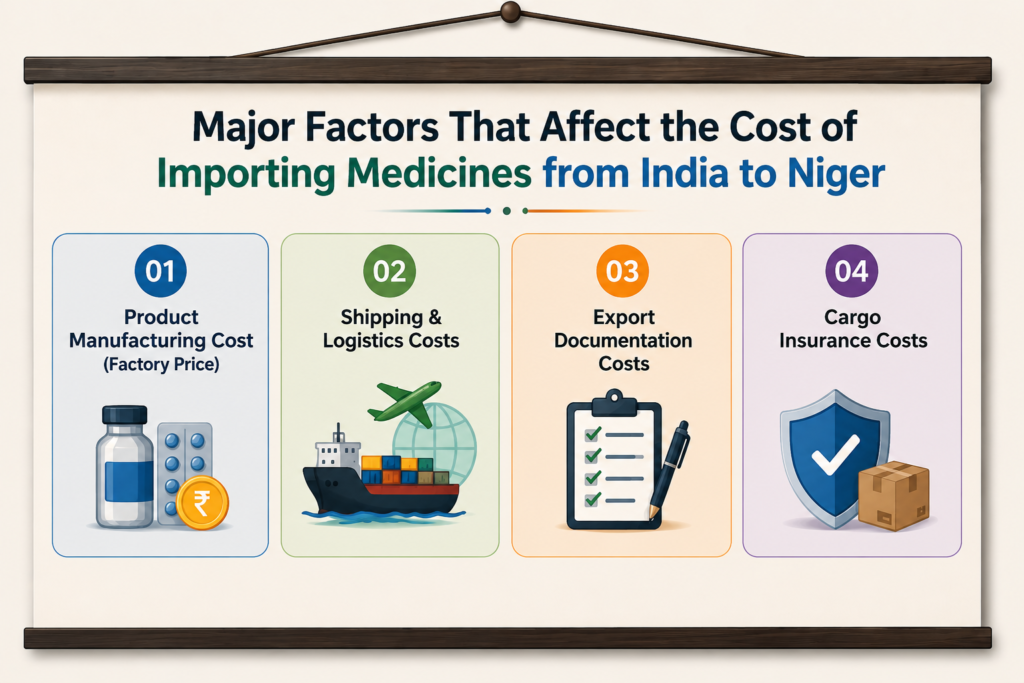
1. Product Manufacturing Cost (Factory Price)
The factory price is the biggest part of the total import cost, usually making up 55 to 70% of the overall expense. Buying medicines in bulk can also reduce the cost per unit, which makes imports more cost-effective.
The final product price depends on factors such as:
- Generic or branded medicines
- Cost of Active Pharmaceutical Ingredients (APIs)
- Dosage form (tablets, capsules, syrups, injections)
- Packaging quality
- Order quantity
- WHO-GMP-certified manufacturing
- Product testing and quality checks
2. Shipping and Logistics Costs
Shipping is another major cost when importing medicines. The total freight costs depend on the shipment size, transport method, destination, and whether the products require cold-chain storage. Medicines like vaccines, insulin, biologics, and other temperature-sensitive products require cold-chain transportation, which can increase shipping costs by 15 to 30%. Some shipping methods to deliver medicines and theri cost according to Reuters include:
- Air Freight: Air freight is best for urgent medicines, vaccines, and injectable products because it offers fast delivery. It takes transit time of 5 to 10 days, and the estimated cost ranges from USD 4-8 per kg.
- Sea Freight: Sea Freight is the most economical option for large commercial orders. Its transit time is 25 to 40 days, and the estimated cost is USD 2500-4500 for a 20-foot container and USD 4000 -7000 for a 40-foot container.
3. Export Documentation Costs
Export documentation is an important part of importing medicines from India to Niger. Complete and accurate documents help to avoid customs delays and ensure the shipment reaches its destination smoothly. Moreover, documentation costs usually range from USD 100 to USD 300 per shipment, depending on the exporter and freight forwarder.
Common export documentation includes:
- Commercial Invoice
- Packing List
- Bill of Lading (Sea Freight) or Air Waybill (Air Freight)
- Certificate of Origin
- Certificate of Analysis (COA)
- WHO-GMP Certificate
- Product Registration Documents (if required)
- Insurance Certificate
- Export Declaration
4. Cargo Insurance Costs
Cargo insurance protects medicines from risks, such as theft, damage, fire, or accidents during transportation. It is especially recommended for high-value and temperature-sensitive pharmaceutical products. Basically, insurance is commonly used for injectable medicines, vaccines, insulin, oncology medicines, and temperature-sensitive products.
Estimated Insurance Cost:
Cargo insurance generally costs around 0.3% to 1% of the shipment value, depending on the type of product, transport method, destination, and overall shipment value.
Factors That Can Increase Medicine Import Costs in Niger
There are several factors that can increase the cost of importing medicines from India to Niger. Knowing these factors can help importers to plan better and avoid unnecessary expenses. Let’s see these factors,
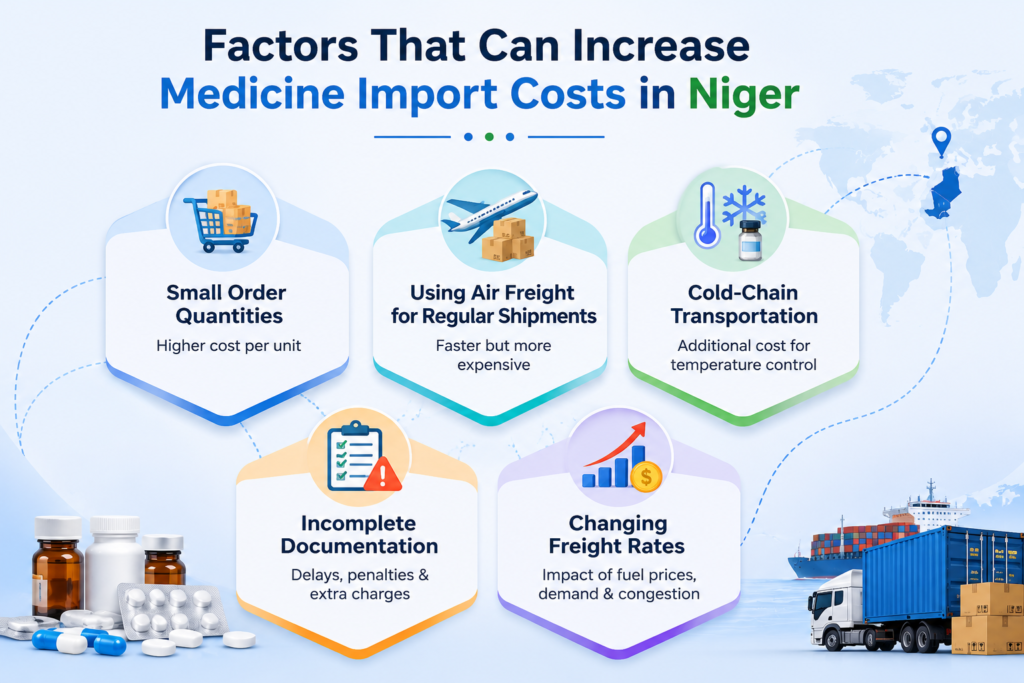
- Small Order Quantities: Small orders usually have a higher cost per unit because manufacturing and shipping expenses are shared across fewer products. Buying in bulk can help to reduce overall costs.
- Using Air Freight for Regular Shipments: Air freight is much faster than sea freight, but it is also more expensive. For routine orders, sea freight is usually the more economical option.
- Cold-Chain Transportation: Medicines such as vaccines, insulin, biologics, and some injectables require temperature-controlled shipping.
- Incomplete Documentation: Missing or incorrect documents can delay customs clearance and lead to extra storage charges, penalties, and additional processing costs.
- Changing Freight Rates: Shipping costs can change because of fuel prices, seasonal demand, port congestion, and global events.
How to Reduce the Cost of Importing Medicines From India to Niger
Reducing import costs is not just about buying medicines at lower prices. By planning your orders, choosing the right shipping method, and working with a trusted exporter, you can lower your overall import costs while ensuring a smooth supply of quality medicines. Here, we have mentioned some tips that will help you to reduce the costs of importing from India to Niger.
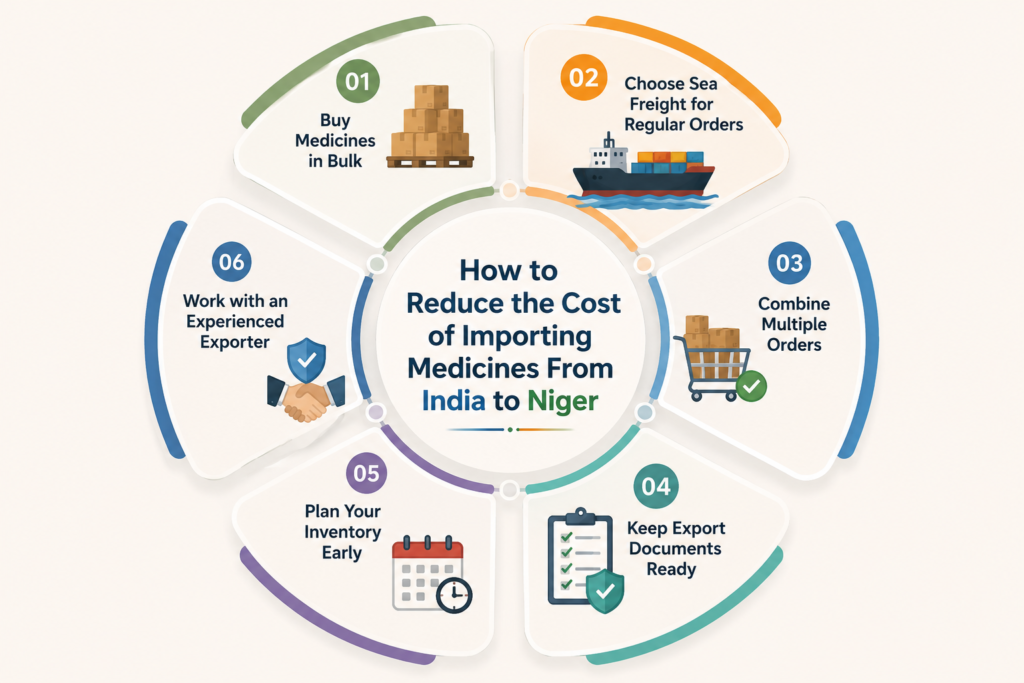
1. Buy Medicines in Bulk
Placing larger orders usually helps you to get better factory prices. Bulk shipments also reduce the shipping cost per unit, which will help you to save more in the long run.
2. Choose Sea Freight for Regular Orders
If your medicines are not urgently needed, then sea freight is the more affordable option. Although delivery takes longer, it costs much less than air freight for large shipments.
3. Combine Multiple Orders
Instead of shipping several small orders, combine them into one larger shipment. This helps to reduce freight charges, customs fees, and documentation costs.
4. Keep Export Documents Ready
Complete and accurate export documents help to avoid customs delays, extra storage charges, and unnecessary expenses. That’s why working with an experienced exporter makes this process much easier.
5. Plan Your Inventory Early
Good inventory planning helps you to avoid emergency orders that require expensive air freight. Ordering in advance allows you to use cost-effective sea shipping.
6. Work with an Experienced Pharmaceutical Exporter
Choose a trusted exporter who can help you reduce costs through competitive pricing, quality products, complete export documentation, reliable logistics, and timely deliveries.
Why Choose Livealth Biopharma for Exporting Medicines to Niger?
Choosing the right pharmaceutical exporting partner is important for a smooth and successful import process. Being a trusted pharmaceutical manufacturer and exporter, Livealth Biopharma supplies high-quality medicines to customers in over 65 countries. With a strong focus on international quality standards and customer satisfaction, our company helps importers in Niger source medicines confidently.
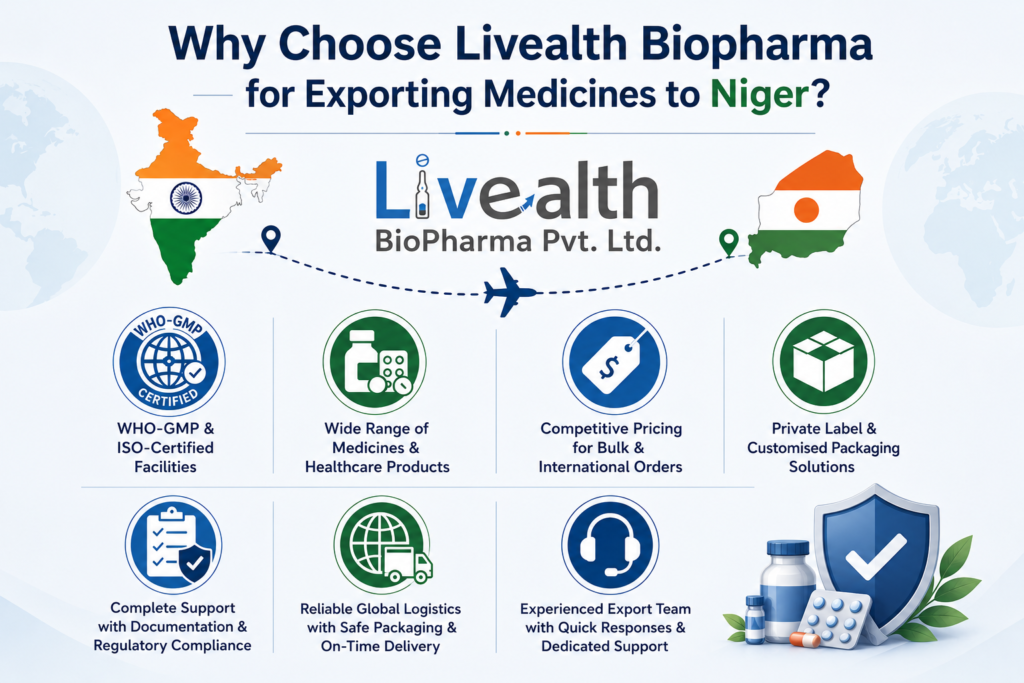
From antibiotics and antimalarial medicines to cardiovascular, diabetes, pediatric, and nutritional products, Livealth Biopharma offers reliable export solutions that are especially designed to meet the growing healthcare needs of the Niger market.
Key Reasons to Choose Livealth Biopharma:
- We have WHO-GMP and ISO-certified manufacturing facilities
- Our company offers a wide portfolio of generic medicines, finished formulations, APIs, nutraceuticals, herbal, and veterinary products
- Competitive pricing for bulk and international orders
- We also provide private label and customised packaging solutions
- Complete support with export documentation and regulatory compliance
- Livealth Biopharma also provides reliable global logistics with safe packaging and on-time delivery
- Experienced export team providing quick responses and dedicated customer support
Conclusion
Understanding the cost of importing medicines from India to Niger helps importers to make better purchasing decisions and manage their budgets more effectively. Along with the medicine price, it is also important to consider shipping, insurance, documentation, customs clearance, and other logistics costs when planning imports.
Moreover, partnering with a trusted exporter can make the entire process easier and more cost-effective. Being a reliable pharmaceutical manufacturer and supplier, Livealth Biopharma offers high-quality pharmaceutical products, competitive pricing, reliable export support, and complete documentation assistance to help importers build a smooth and sustainable medicine supply chain for the growing Niger market.